I resolved at the beginning of 2025 to cut down significantly on plastic-packed foods. We had already for several years been getting a veg-box delivered from Riverford, and getting our milk in returnable glass bottles from the milkman (Milk and More). But my wife, Jane, felt we could be doing more. Whilst agreeing with her in principle, in practice I dragged my feet. In my attempts to reduce our household spending, I often succumbed to the temptation to buy greatly price-reduced food items on or near their sell-by dates, items which are often plastic-packed. Eventually, admitting that, in my case, this behaviour was more habit than economic necessity, I decided it was time to change my priorities. This decision was reinforced by ugly images we see in the media of plastic pollution in otherwise scenic far-flung places, and news about how microplastics are invading our bodies and ecosystems.
In our drive to cut down on purchases of plastic-packaged food, we are prioritising those plastics we can’t recycle. Locally, it is only soft plastic and plastic bottles that we are told can be recycled, and it feels awkward palming off our plastic waste onto our daughter whose local authority can deal with it. And, to be honest, I am sceptical about how much plastic is actually recycled and how much in reality ends up in landfill, incineration furnaces or some remote unknown destination.
Well, a few weeks on, how’s it going? Not as hard as I thought it might be actually. I should qualify this by acknowledging that we are relatively well placed to take action on this issue, partly because we are fairly well off, and partly because we are retired and have some spare time. For example, we can easily afford to buy plastic-free food items, which are often more expensive than the high-plastic alternatives. For example, fish from the fish counter. This choice is obviously going to be more difficult for lower-income households. Secondly, we have found that it is often possible to avoid plastic by making home-made foods from ingredients that are bought from a refill store, while for those who are still working, finding time to make at home is likely to be harder.
I have started by making our own peanut butter, tahini, hummus and vegan ice-cream and butter, all from plastic-free food ingredients. We have discovered Bitterne Park Stores, where a lot of these ingredients can be bought.
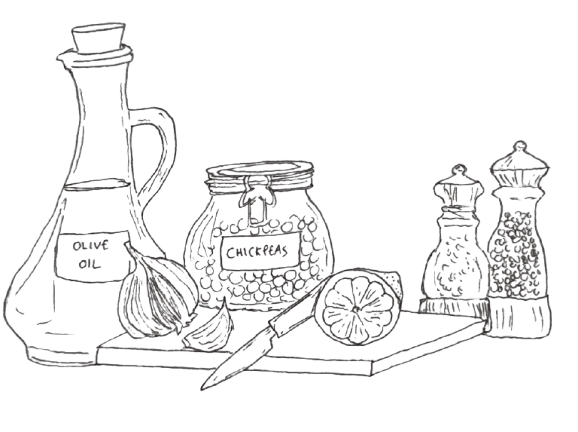
After just a few weeks of this enterprise it still feels like fun, but maybe the novelty will wear thin after a while. We have found these home-made recipes to be quite easy to make; they taste better and it feels good knowing that they are not laced with the suspicious-sounding ingredients that one finds listed on the packets of supermarket products.
In other cases, where there doesn’t appear to be a way of buying a particular product without compromising one or more of our principles, we have, by default, gone without. For example, I am a vegan (Jane isn’t), and I haven’t yet found a way of buying plastic-free vegan yoghurt, so my yoghurt consumption has dropped close to zero this year. I have attempted to make my own vegan yoghurt but, so far, without much success (it tends to come out runny and without much flavour). For those who are not dairy free, one can buy yoghurt in glass jars, and we get ours from the milkman.
I refer, above, to our “principles”, and I mentioned, as an example, my veganism; actually, to be more precise, “pesco-veganism” (I still eat fish!). Other ideals that we try to stick to include buying only products that are more “ethical” (a big, difficult, and very confusing subject), avoidance of ultra-processed “food”, and a preference for organic.
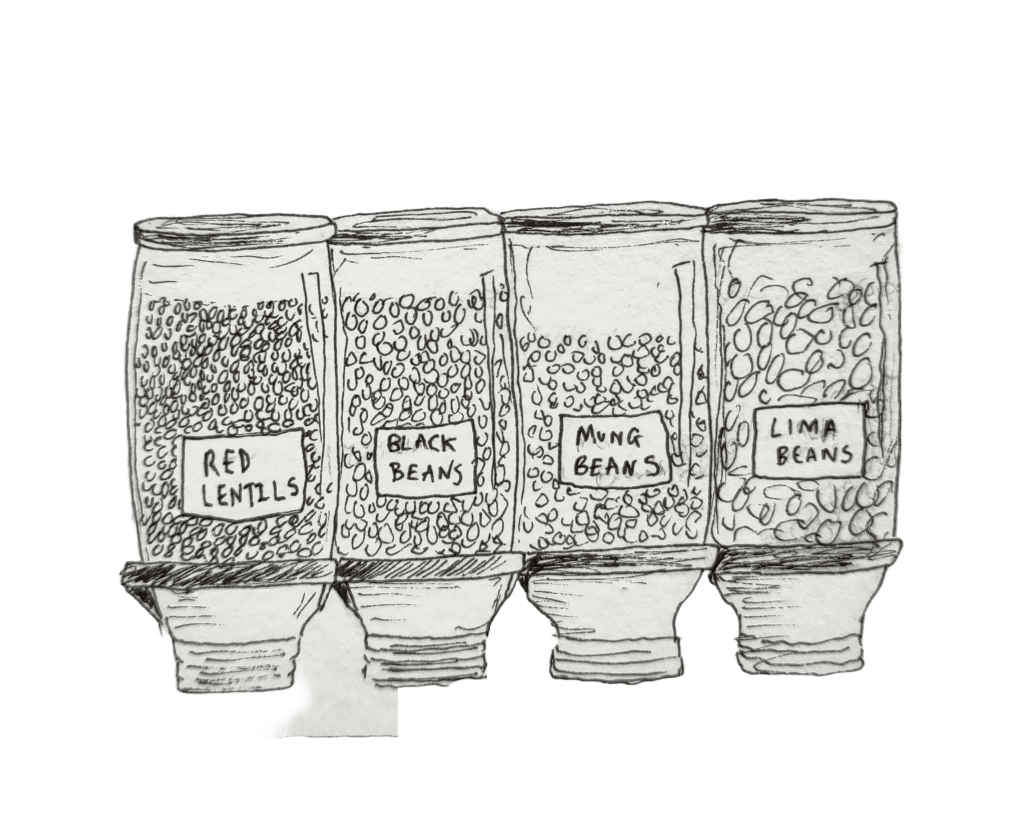
The reason I mention this here is that these ideals have a bearing on the attempt to reduce plastic. I’ll give an example: as a pesco-vegan, I had been enjoying some rather clever vegan meat imitations up until the end of last year. But when we received the latest issue of Ethical Consumer and I was given for Christmas a copy of the best-selling book Ultra-Processed People, my eyes were opened to the fact that many vegan meat imitations are produced unethically and contain potentially harmful additives, apart from any concerns about plastic packaging. Another example is that, in some supermarkets, the organic produce is packaged in plastic whilst the non-organic alternatives are sometimes sold loose without any packaging at all.
Having multiple ideals sometimes leads to conflicts between them, making it necessary to prioritise them. For example, one of my own aims is to minimise the number of gadgets that we possess. But, in choosing to make our own foods, as mentioned above, I found that it was necessary to buy a couple of additional food processors (made of plastic!). People who are less fastidious than I am should, I think, find it easier to cut down on plastic.
Well, that’s a summary of the first few weeks of my/our project to significantly reduce our reliance on plastic. I have only talked about food packaging and I realise that, of course, the issue is bigger than just that; but one has to start somewhere. I am planning to provide further updates as new lessons and insights are learned, and I invite you to follow along as we go!
 Reducing Plastic - My Journey
Leave a comment